
Source: FIA Formula E
Introduction
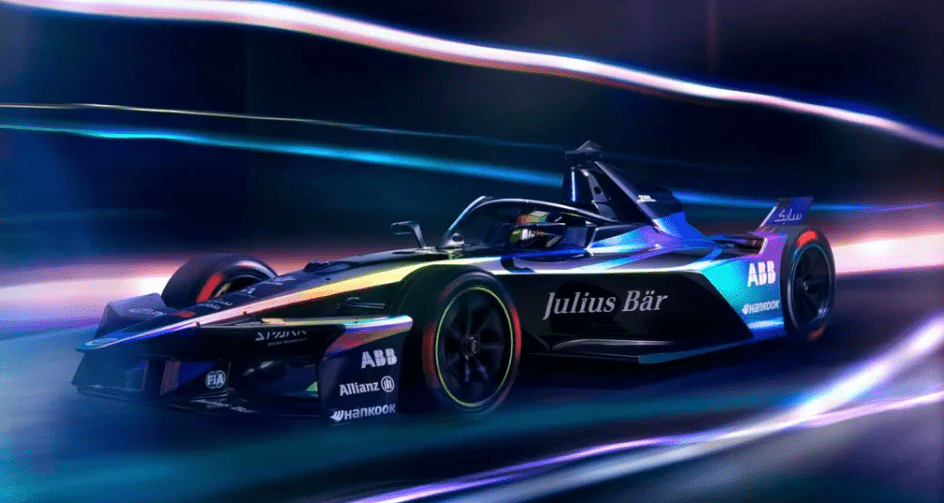
The Fédération Internationale de l’Automobile (FIA) and Formula E have revealed the fastest-accelerating single-seat car ever made: the GEN3 Evo Race Car!
Technical specialists from both the FIA and Formula E have reached a remarkable achievement towards the future of electric racing. Having surpassed other racing cars across all the FIA competitions, the GEN3 Evo Race car will have its debut in the upcoming eleventh season of Formula E in 2025.
This blog will walk through a technical analysis of the capabilities of the GEN3 Evo.
What makes the GEN3 EVO race car so special?
Acceleration & Power
The GEN3 EVO will be able to do 0-60 mph in 1.82 seconds (0-100 kph in 1.86s). In comparison, a current 2024 season Formula 1 car can perform the same acceleration in 2.6 seconds, while the GEN3 version, launched in season 9 of Formula E, holds a record of 2.8 seconds. This makes the GNE3 EVO faster than both the current Formula 1 and GEN3 Formula E by over 30%. The graph below shows the difference in acceleration between the FIA competition cars:

Source: Formula E YouTube channel
While the All-Wheel-Drive (AWD) mode is used in other competitions in motorsport, such as Rally and World Endurance Championship (WEC), the GEN3EVO will be the first time that a single-seat FIA racing car will implement an AWD drive mode.
When asked about the real-world performance development, Xavier Mestelan Pinon, the FIA Chief Technical & Safety Officer stated in a press interview for the FIA “Now, we will be able to use the front axle, also on the throttle. The maximum power from the Quali (pre-race qualifying event) mode or ATTACK MODE will be still 350kW” referring to the current Formula E GEN3 regulations.
He added “but a part of that (maximum power of 350kW) will be on the front, that means a maximum of 50kW”.
The performance isn’t just in the numbers: David Coulthard, a retired Formula 1 Driver and co-presenter and commentator for Formula 1, called the acceleration “incredible” when test-driving the GEN3 EVO car at the famous Circuit de Monaco. The car was unveiled at H.S.H. of Prince Rainier III’s Car Collection in Monaco last month.
What is Attack Mode in Formula E?
Attack mode is a Formula E technical regulation that allows an additional boost of power over the 300 kW limit in normal driving for up to 50 kW from the Rechargeable Energy Storage System RESS, which makes the maximum total power going out of the RESS limited to 350 kW in attack mode. It was first used in Season 5 (2018-2019).
Attack mode can be activated after two full laps into the race.
To activate attack mode, a driver must use a push button wired to the FIA CAN logger located on their steering wheel and go through the “Activation Zones”, which are wider paths located around specific corners that vary between every circuit. The driver balances losing time by going off the racing line to the Activation Zone corners.
All drivers must pass through all the Activation Zones before using attack mode and must use the total amount of time allocated for the attack mode.
Read more about the Formula E FIA regulations here.
Overall Performance
The GEN3 EVO car can reach a speed of up to 200mph, subject to the racetrack conditions, which makes it the fastest Formula E car ever made.
The car can achieve such high speed due to its revamped aerodynamic front bodywork which has been designed to reduce drag.
As a result of applying the AWD mode in the GEN3, drivers will have better traction reactions from the car. Consequently, the car will have more grip to make the most out of the 350kW of power provided by the battery.
Along with optimised all-weather Hankook iON tires, the GEN3 EVO boasts over 9% more grip compared to the current GEN3 model. It all comes down to how the teams use the new functionalities to tune their cars and apply their race strategy.
In the Trackside Engineering in Formula E course, course leader Rui Alves, who worked as a Strategy Engineer at Audi Sport Formula E, explains in-depth the key concepts of Formula E Performance Engineering and Race Strategy.

Check out Trackside Engineering in Formula E course HERE!
Toward a Sustainable Future
According to the FIA’s official website, the GEN3 EVO race car is the most efficient Formula car to date. The electric motor that replaces the internal combustion engine in its Formula 1 counterpart has over 90% efficiency in converting motor power into in-wheel power. The typical efficiency of internal combustion engines is just 40%.
The FIA announced an environmental goal of net zero carbon emissions by 2030. It is planning to eliminate all carbon emissions effects across the organisation’s practices and championships.
The GEN3 EVO is the world’s first net zero carbon race car. The car applies the FIA’s three strategies of climate action, technology and innovation and sustainable practices, starting from the mining of the battery cells material, up to the recycling of carbon fibre and natural minerals in the chassis body and battery elements.
Utilising the Attack Mode, which requires extra power, will add uncertainty and excitement to the outcome of the races. For this reason, the GEN3 EVO allows cars to regenerate power generated from braking of up to 600 kW (250 kW front and 350 kW rear), aligning with Formula E’s standards of promoting sustainable racing.
The new GEN3 EVO technologies have opened the door for further development not only on race cars but also in the automotive industry and beyond. We look forward to seeing where car manufacturers will apply these recent technological findings to their on-road and off-road vehicles.
Meet the Author

Ali Abdelrahim holds an MSc in Electric Vehicle Engineering from the Motor Vehicle University of Emilia-Romagna MUNER – Alma Mater Studiorum – Università di Bologna in Italy, and a BEng degree in Mechatronics Engineering from The University of Manchester in the UK. Ali has international expertise within the Automotive & Motorsport sectors, having worked in Italy and Spain with a few of the biggest OEMs and suppliers in the world. Ali is passionate about high-performance and racing cars. Outside work, he enjoys playing football and go-kart, reading and learning new languages.
